
"mechanical harvesting"
1000 article(s) found

How many kinds of coffee beans are there? comparative introduction of three processing methods of coffee beans
Professional coffee knowledge exchange more coffee bean information please follow the coffee workshop (Wechat official account cafe_style) Qianjie-Coffee treatment introduction 1. Drying method is a traditional processing method of coffee beans, the fruits need to be dried in the natural sun after harvest, and some mechanical drying is carried out at the same time. The process is as follows: harvest sun field (sunlight exposure) sheller (remove pulp, etc.)

From coffee tree to coffee
Coffee is a perennial evergreen shrub or small tree of Rubiaceae. It is a horticultural perennial cash crop with the characteristics of fast growth, high yield, high value and wide market. Wild coffee trees can grow to a height of 5 to 10 meters, but coffee trees planted on the manor are often cut to less than 2 meters in order to increase their fruit and facilitate harvesting.

Introduction to the Flavor description characteristics of El Salvador Himalayan Coffee varieties
El Salvador Himalayan coffee flavor description introduces the endless coffee fields, mostly harvested by machinery, in order to meet the economic benefits. When 75% of the coffee fruit in the coffee garden turns red, mechanical harvesting is started, followed by the same pre-washing operation, which is moved into the sink to remove floating beans, sift out the sunken beans, and then use a large pulp screening machine to dig out the pulp and remove the pods covered with pectin. Next

Queen of Brazil Estate Yellow Bourbon| Coffee Workshop Study Room
This coffee comes from Fazenda Rainha (Queen's Estate), which covers an area of 280 acres and is located in Vale da Grama, an ancient volcanic valley in Brazil. In 2011, the estate won the Brazilian COE competition. Fazenda Rainha belongs to the famous and respected Carvalho Dias family.

Taste treatment of El Salvador Himalayan boutique coffee beans Flavor description of grinding scale
Coffee fields are endless, and most of them are harvested by machinery, which is in line with economic benefits. When 75% of the coffee fruit in the coffee garden turns red, mechanical harvesting is started, followed by the same pre-washing operation, which is moved into the sink to remove floating beans, sift out the sunken beans, and then use a large pulp screening machine to dig out the pulp and remove the pods covered with pectin. The next stage is separated from the washing method: sticky beans.

The growth cycle of Coffee and the Coffee Science of picking Fine products
The growth cycle of coffee and the picking of coffee beans are the seeds of coffee trees. After three or four years of growth, the coffee tree matures and begins to bear fruit, with one fruit arranged in clusters or clusters along the branches. The outside of the seed is a layer of peel, which can be picked as soon as it turns red. Under the red skin (exocarp) there is a layer of pulp (mesocarp), inside is a small thin layer, and then there is a layer like parchment

The growth cycle of coffee and picking coffee beans are the seeds of coffee trees.
Coffee beans are the seeds of coffee trees. After three or four years of growth, the coffee tree matures and begins to bear fruit, with one fruit arranged in clusters or clusters along the branches. The outside of the seed is a layer of peel, which can be picked as soon as it turns red. Under the red skin (exocarp) there is a layer of pulp (mesocarp), which is a small thin layer, and then a layer of material endocarp like parchment. In

Flavor description of aromatic Salvadoran Pacamara Coffee introduction to Grinding scale by Taste treatment
Coffee fields are endless, and most of them are harvested by machinery, which is in line with economic benefits. When 75% of the coffee fruit in the coffee garden turns red, mechanical harvesting is started, followed by the same pre-washing operation, which is moved into the sink to remove floating beans, sift out the sunken beans, and then use a large pulp screening machine to dig out the pulp and remove the pods covered with pectin. The next stage is separated from the washing method: sticky beans.

Geography and climate of coffee bean production process in Rwanda
Production process editors Coffee fruits the maximum harvest season for Rwandan coffee is during the main rainy season in the area, from March to the end of May. During the harvest season, farmers spend most of their day picking coffee fruits by hand. In the afternoon, farmers carry coffee fruits in traditional baskets made of banana leaves to a cleaning station a few hours away. The mechanic will do it by hand.
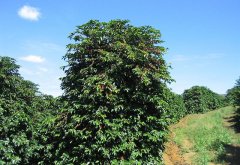
Coffee knowledge from Coffee Tree to Coffee
Coffee trees grow coffee as perennial evergreen shrubs or small trees of Rubiaceae. It is a horticultural perennial cash crop with the characteristics of fast growth, high yield, high value and wide market. Wild coffee trees can grow to a height of 5 to 10 meters, but coffee trees planted on the manor are often cut to less than 2 meters in order to increase their fruit and facilitate harvesting. The first opening of a coffee tree

The skills of planting and harvesting Coffee the growth status of coffee trees
The first people to drink coffee lived in Ethiopia. A drink called Buncham was found in the Arab scientific literature of 900-1000 AD, but it is not certain that it is coffee. These documents mainly record the scientific value of this bean called Buncham. In addition to introducing the protective effects of this drink on the stomach, organs and skin, the author also mentioned that it can make

Introduction of El Salvador Himalayan Coffee Variety characteristics Regional treatment Grinding scale Manor
El Salvador Himalayan coffee varieties characteristics of regional treatment grinding scale manor introduction coffee fields are endless, most of them are harvested by machinery, in order to meet the economic benefits. When 75% of the coffee fruit in the coffee garden turns red, it starts to be harvested mechanically, followed by the same pre-operation of washing, moving into the sink to remove the floating beans, sifting out the sunken beans, and then using a large pulp screening machine to dig out the pulp.

(turn) from coffee tree to coffee
Coffee is a perennial evergreen shrub or small tree of Rubiaceae. It is a horticultural perennial cash crop with the characteristics of fast growth, high yield, high value and wide market. Wild coffee trees can grow to a height of 5 to 10 meters, but coffee trees planted on the manor are often cut to less than 2 meters in order to increase their fruit and facilitate harvesting. The first flowering period of a coffee tree is about the age of the tree.

Introduction to the characteristics of Coffee Bean Flavor Manor in Rwanda
Malaba Coffee grows in southern Rwanda, about 12 kilometers (7 miles) from the city of Butare and 150 kilometers (93 miles) from the capital, Gejali. The plan began in the Malaba area of Butare province, but was taken over by a local government organization in 2006, which is now part of the Huye district of the southern province. Due to its proximity to the East African Rift Valley and the Neuenway Forest Mountains, the terrain

Description of roasting degree and Flavor of Colombian Coffee introduction to the production area of Grinding scale by Taste treatment
Colombian coffee roasting flavor description, taste treatment, grinding scale production area introduces dry processing: the coffee fruit is dried and dehydrated by natural conditions such as sunlight and ventilation, and then the dried coffee fruit is put into the peeled pulp, peel and silver peel. This method is the most economical and traditional processing method. Coffee beans treated by this method can maintain their fragrance for a long time, but the same as that of coffee beans.
[raw bean file] introduction to Huang Bourbon, Queen's Manor of Brazil
[manor introduction]: this coffee comes from FazendaRainha (Queen's Manor), which covers an area of 280mu and is located in Vale da Grama, an ancient volcanic valley in Brazil. In 2011, the manor won the championship in the COE competition in Brazil. Fazenda Rainha is owned by the prestigious and respected coffee family Carvalho Dias family.

Characteristics of coffee flavor and taste of Malaba coffee in Rwanda introduction to Chimeier Manor in manor producing area
Rwanda has many mountains and is known as the country of a thousand hills. The whole country is at a high altitude: the lowest point, the Luzizi River, is also 950 meters above sea level. The Midwest is dominated by mountains, which are part of the Aberdeen Rift Valley, which is part of the East African Rift Valley, extending from north to south along the western border of Rwanda. The highest mountain in the country is located in the northwest of Wei.

Introduction to Queen Farm information of Fazenda Rainha in Brazil
For the exchange of professional baristas, please follow the coffee workshop (Wechat official account cafe_style) Brazilian coffee, there are many kinds of Brazilian coffee, like other Arabica coffee, most Brazilian coffee is not washed but dried, they are classified according to the name of the country of origin and the port of transport. Brazil has 21 states and 17 states produce coffee, but five of them produce the most coffee.

Theoretical study, from coffee tree to coffee
Coffee is a perennial evergreen shrub or small tree of Rubiaceae. It is a horticultural perennial cash crop with the characteristics of fast growth, high yield, high value and wide market. Wild coffee trees can grow to a height of 5 to 10 meters, but coffee trees planted on the manor are often cut to less than 2 meters in order to increase their fruit and facilitate harvesting. The first flowering period of a coffee tree is about the age of the tree.

Introduction to the manors in the producing areas of El Salvador coffee beans by the method of flavor grinding and calibration
El Salvador coffee bean flavor grinding scale treatment variety production area manor introduction coffee fields are endless, most of them are harvested by machinery, in order to meet the economic benefits. When 75% of the coffee fruit in the coffee garden turns red, it starts to be harvested mechanically, followed by the same pre-operation of washing, moving into the sink to remove the floating beans, sifting out the sunken beans, and then using a large pulp screening machine to dig out the pulp and take it out.